

Entrepreneurs hire virtual assistants to escape burnout and busywork—delegating admin, cash-flow tracking, scheduling, and customer service. The payoff: up to 70% lower costs than a full-time hire and 13+ hours back every week to focus on growth.
As an entrepreneur, do you feel that mundane tasks are quietly stalling your growth? A virtual assistant knows the drill. And the pressure is real: 72% of entrepreneurs report moderate-to-high stress at work, and burnout can cost a business $4,000–$21,000 per founder each year in lost productivity and turnover. The root cause isn’t just a heavy workload—it’s the stress and anxiety that ride along with it.
From a ticking clock and rising workload to growth targets and customer satisfaction, the entrepreneurial world is a mix of complexity and big rewards. The good news: most of what drains you can be delegated.
What Is a Virtual Assistant?
Quick answer: A virtual assistant (VA) is a trained remote professional who handles the recurring work that eats an entrepreneur’s day. Typical tasks include:
- Administrative support — inbox, calendar, scheduling, and data entry.
- Cash-flow & bookkeeping support — tracking expenses, receipts, and invoices.
- Customer service — answering inquiries and managing your CRM.
- Research & reporting — market research and performance tracking for planning.
- Personal assistance — the errands and follow-ups that protect your focus.
Explore the full range of virtual assistant services a business can offload.
8 Reasons Entrepreneurs Need a Virtual Assistant
If time management is what you’re after, a virtual assistant delivers faster turnarounds and fewer dropped balls. Here are eight reasons entrepreneurs invest in one—so they can grow smartly instead of scrambling.
1. No More Work-Life Turmoil
How many family gatherings or catch-ups with friends have you skipped because business came first? Over time, that takes a toll—chronic stress is one of the biggest drivers of entrepreneurial burnout. With a virtual assistant handling routine tasks, you regain balance: from personal assistance to workload relief, a VA helps you carve out time for the people who matter while the business keeps moving.
2. Real Cost Effectiveness
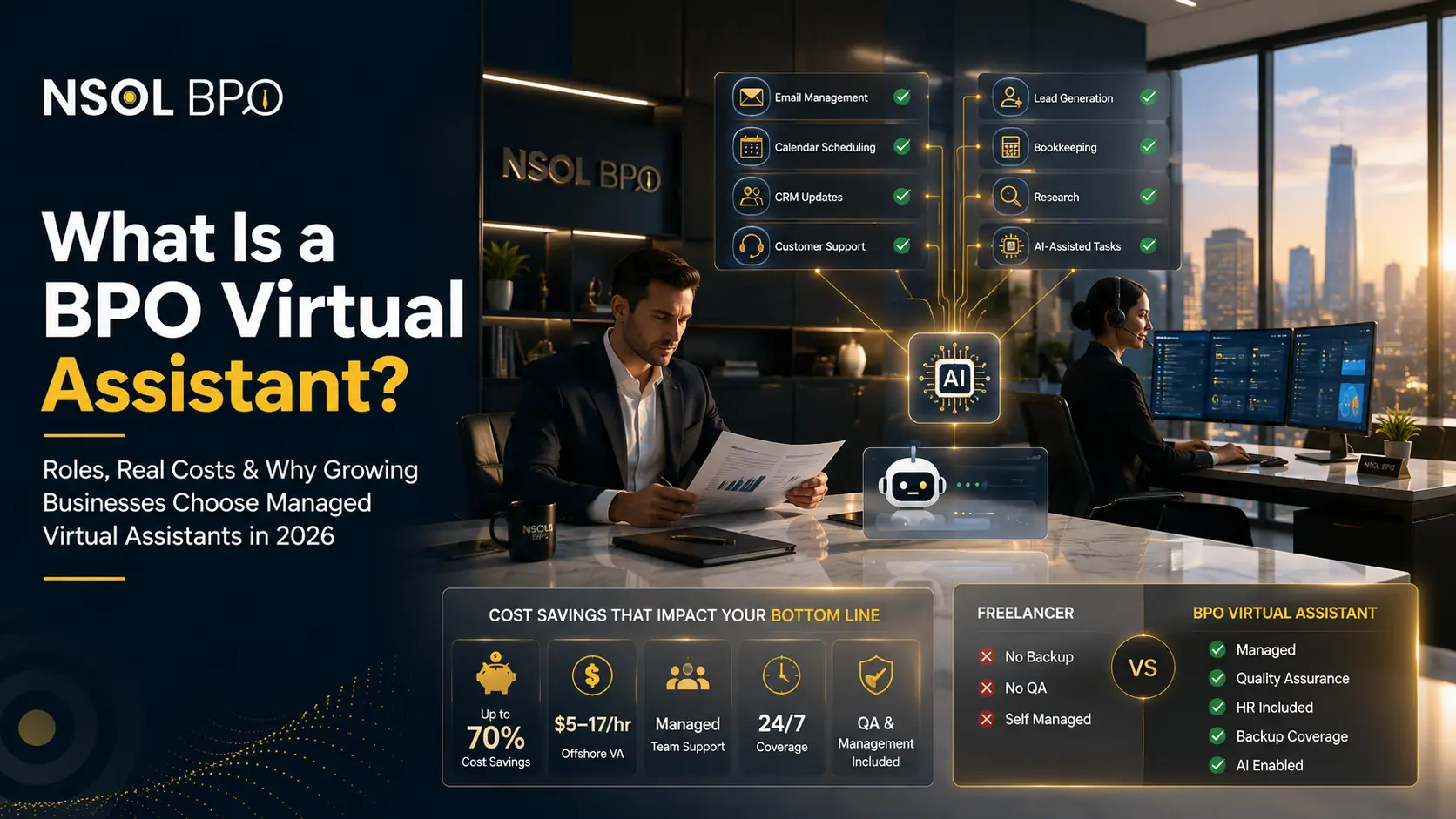
Wondering how a VA is actually cheaper? A full-time employee carries salary, benefits, equipment, office space, and training. A virtual assistant carries none of that—you pay only for the hours or services you use. Businesses report saving up to 70% on operating costs, with a US employer often saving $11,000+ a year per VA. See the full breakdown of how much a virtual assistant costs.
3. More Room to Grow
Growth is the mantra you live by—but draining, repetitive tasks block the path to creativity and strategy. A virtual assistant takes those tasks off your plate so you can focus where you add the most value. In fact, entrepreneurs who delegate report reclaiming 13–15 hours a week—time that goes straight back into building the business.
4. Effective Cash-Flow Management
Delayed payments, surprise costs, and scaling pains make financial planning stressful—and poor cash-flow management is a leading cause of small-business failure. A VA keeps accurate records of expenses and receipts, tracks budgets, and preps financial reports, so your cash flow stays smooth and your planning stays calm.
5. Rapid Turnaround Times
Entrepreneurs wear every hat—operations, sales, client relationships—and tasks pile up and slow down. A virtual assistant with multi-task expertise streamlines workflows and cuts delays, freeing you to concentrate on high-priority work. Remote professionals also deliver around 13% higher productivity than on-site staff, so more gets done in less time.
6. Key Support in Strategic Planning
Does strategic planning keep getting pushed aside by day-to-day firefighting? You need to monitor the market and innovate to stay competitive—but that takes time you rarely have. A VA supports planning by handling market research, performance tracking, and time optimization, clearing space for the creative, big-picture thinking only you can do.
7. Ease in Administrative Tasks
When a founder spends the day on admin instead of marketing or product, momentum stalls. A virtual assistant brings order to the busywork—organization, scheduling, and email management—so nothing slips through the cracks. It’s the same rigor a dedicated data entry virtual assistant brings to records-heavy work.
8. Better Customer Service
Customer experience is a growth lever: 93% of customers say they’re likely to make repeat purchases from companies with great service. But support often slips when you’re juggling everything. A VA handles inquiries with fast, consistent responses, follows a standardized process for reliable quality, and works comfortably within your CRM to keep operations smooth.
Do-It-All Founder vs. Delegating to a VA
Still deciding whether to delegate? Here’s the honest comparison. (For the hiring math, see virtual assistant vs. a full-time employee.)
| Factor | Doing it all yourself | With a virtual assistant |
|---|---|---|
| Weekly hours | 60+ hours, admin-heavy | 13–15 hours reclaimed for growth |
| Cost | Full salary + benefits + overhead | Pay only for what you use (up to ~70% less) |
| Focus | Split across every task | Freed for strategy, sales & product |
| Burnout risk | High and rising | Lower—routine load is offloaded |
| Scalability | Capped by your own hours | Scale support up or down on demand |
| Feeling stretched thin? NSOL BPO pairs you with a trained virtual assistant who fits your workflow. Book a free 3-day trial and feel the difference in a week. |
How to Choose the Right Virtual Assistant
The value of a VA depends on the fit. Use these five checks to choose well—and see more reasons to hire a virtual assistant if you’re still weighing it up:
- Match skills to your gaps. List what drains you most—admin, bookkeeping, customer service—and hire for those specific strengths.
- Check experience and tools. Look for familiarity with your CRM, calendar, and email tools so ramp-up is quick.
- Start with a trial task. A short paid trial or free trial reveals quality, communication, and reliability before you commit.
- Confirm communication and overlap. Agree on response times, working-hour overlap, and check-in cadence up front.
- Set clear standards and security. Share SOPs and expectations, and use NDAs plus role-based access for sensitive data.
Frequently Asked Questions
What does a virtual assistant do for entrepreneurs?
A virtual assistant handles the recurring work that pulls founders away from growth—email and calendar management, data entry, bookkeeping support, scheduling, research, and customer service. The result is more focus time for strategy, sales, and product.
Why should entrepreneurs hire a virtual assistant?
Because it directly attacks the two biggest founder problems: overload and cost. Delegating routine work lowers burnout risk, reclaims 13–15 hours a week, and costs far less than a full-time hire—so you grow without adding overhead.
How much does a virtual assistant cost?
Rates vary by skill and location—offshore VAs often run about $3–$20 an hour versus $25–$75 for US-based staff—and you pay only for the hours you use. Because there are no benefits or office costs, businesses commonly save up to 70% versus a full-time employee.
Is a virtual assistant cheaper than a full-time employee?
Usually, yes. A full-time hire adds salary, benefits, equipment, and training; a VA adds none of those. A US employer often saves $11,000+ per year per VA by paying only for productive hours.
How many hours a week can a virtual assistant save me?
Entrepreneurs who delegate report regaining 13–15 hours a week on average, and 43% of managers say a VA cut their workload by 10+ hours weekly in 2025—time that goes back into revenue-generating work.
What tasks should I delegate to a virtual assistant first?
Start with repetitive, rules-based work: inbox and calendar management, data entry, and appointment scheduling. These free the most time with the least risk, and you can expand into research, bookkeeping, and customer service as trust builds.
Can a small business or solopreneur afford a virtual assistant?
Yes—67% of solo entrepreneurs already use one. Because you can hire part-time or by task, even a lean business can offload a few hours of admin a week and scale up only when it makes sense.
How do I choose the right virtual assistant?
Match their skills to your biggest time drains, check that they know your tools, run a short trial task, agree on communication and working-hour overlap, and set clear standards with an NDA for sensitive data.
How quickly can a virtual assistant start?
Because VAs are pre-trained, most can be productive within days rather than the weeks a traditional hire takes. A brief onboarding to your tools and standards is usually all it takes.
The Bottom Line
Let’s cut to the chase: you want to spend your time growing the business, not drowning in draining tasks. That’s exactly where a virtual assistant earns its keep—less burnout, lower costs, and hours handed back to you every week.
NSOL BPO is here to make your entrepreneurial journey lighter and more focused on growth. Ready to try it? Get a virtual assistant on a free 3-day trial and put your time back where it belongs.