
Your office is open forty hours a week. There are 168 hours in a week.
That’s the whole problem in one line. For roughly 76% of the week, anyone with a legal problem who calls your firm reaches a recording. Some of them leave a message. Most call the next firm on the list.
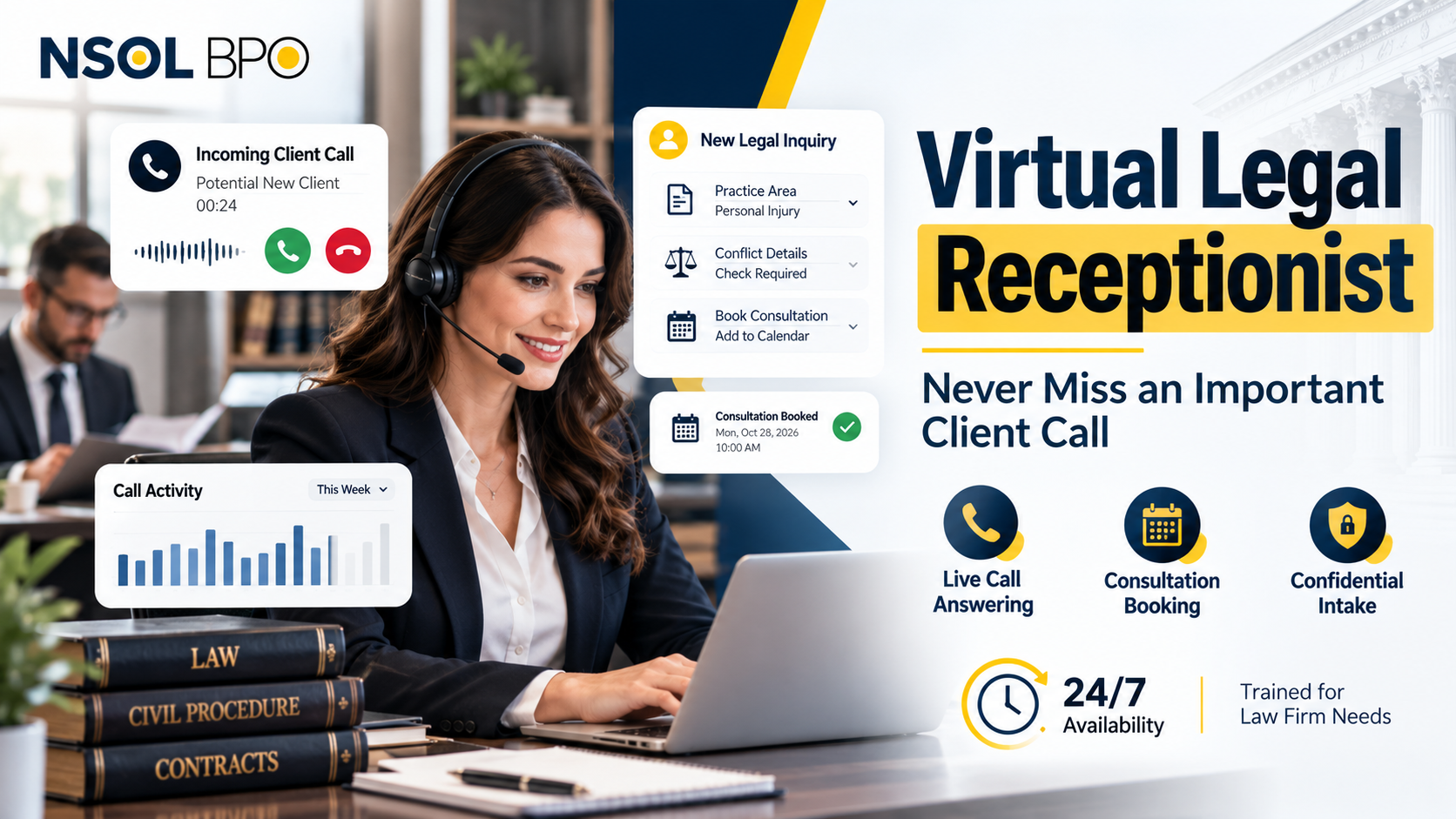
A virtual legal receptionist closes that gap and does a few things a general answering service can’t. This guide covers the difference, the six signs your firm has outgrown voicemail, what it costs, and where the confidentiality line sits.
What a Virtual Legal Receptionist Does Differently
Three things separate a virtual legal receptionist from a general answering service, and all three matter to a law firm.
They know what they cannot say. A legal receptionist can describe your practice areas, your fee structure, and your process. They can’t evaluate a case, predict an outcome, or tell a caller whether they’ve got a claim. That line is the unauthorized practice of law, and an agent who’s also handling plumbing and dental accounts has no reason to know where it sits.
They capture what matters. Opposing party names for your conflict check. Dates that might touch a limitation period. Which court, which county. A general agent takes a name and a number.
They work inside your systems. Booking into your calendar, opening a matter, logging the call where your team will see it. Without system access, you’ve bought a message service and called it a receptionist.
Everything else about hiring a virtual legal receptionist follows from those three.
Worth saying plainly: none of this requires a legal qualification. It requires training on a narrow set of rules and a script that encodes your judgment. The distinction matters because providers charge paralegal rates for reception work when firms don’t know the difference.
The 6 Signs Your Firm Needs One
Most firms recognize at least three of these. Three or more, and a virtual legal receptionist pays for itself on the calls you’re currently losing.
1. Calls go to voicemail during the day. Not just after hours. Lunch, hearings, depositions, the half hour your receptionist is at the printer. If you’ve never counted how often this happens, that counts as a yes.
2. Attorneys answer their own phones. At a median wage of $76.76 an hour, a partner screening a wrong number is the priciest triage in the building.
3. Nobody can say how many calls came in last month. If the number doesn’t exist, you can’t tell whether your marketing’s working or your phone’s broken.
4. Your intake quality depends on who picked up. Different questions, different notes, different outcomes, depending on which person answered. That isn’t a staffing problem. It’s a missing script.
5. Weekend and evening calls are effectively lost. Legal problems don’t keep office hours. Arrests, accidents, and terminations happen on Friday night more often than Tuesday morning.
6. You’re paying for leads you can’t catch. Ad spend generates calls. If the system catching them is voicemail, you’re buying traffic and dropping it at the door.
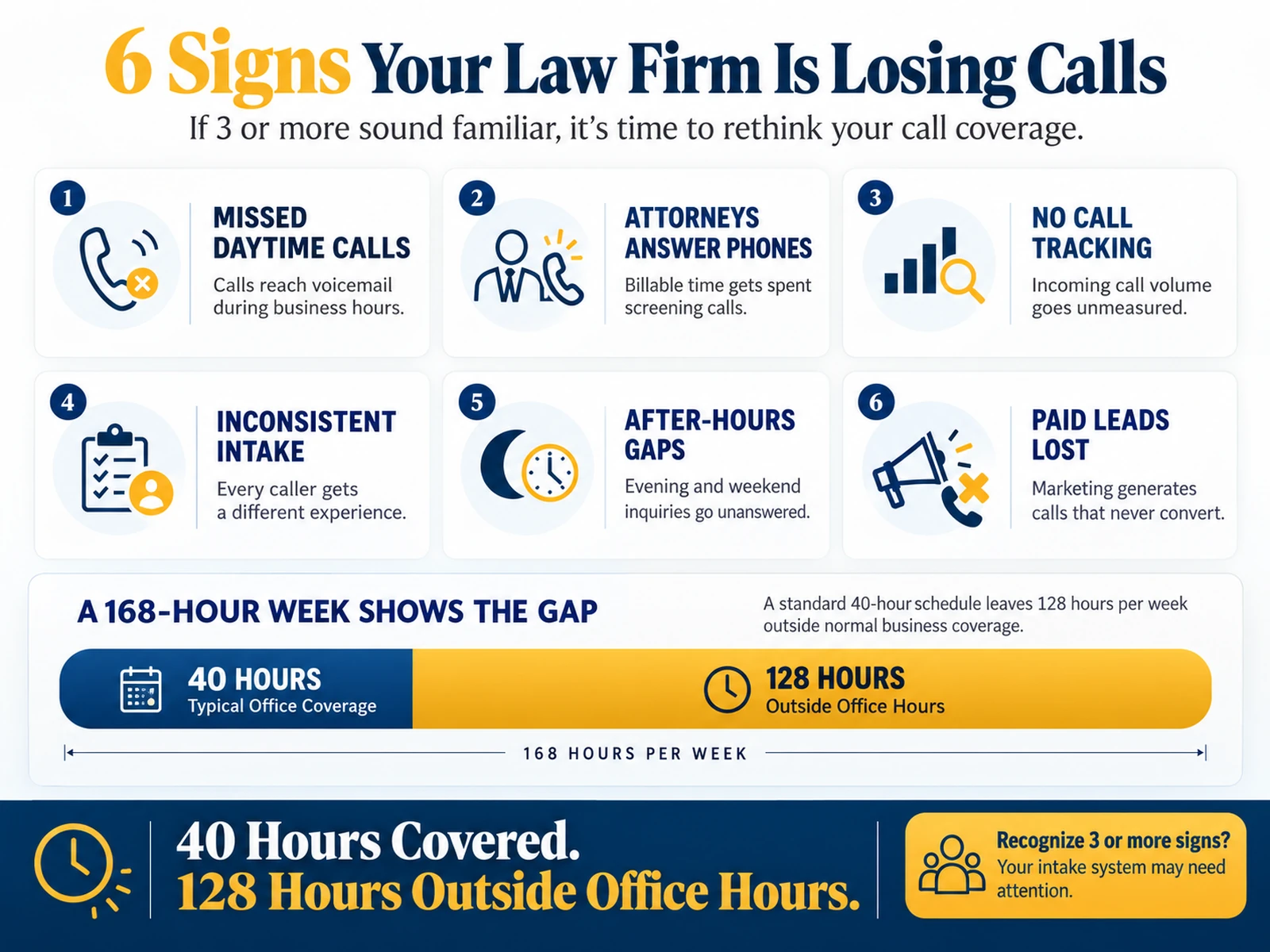
Forty hours covered. One hundred and twenty-eight, not.
If three or more of those landed, the question isn’t whether to fix it anymore. It’s which structure fits your volume.
Virtual Receptionist for Lawyers: What It Costs
Firms pricing a virtual receptionist for lawyers usually compare against a salary, and a salary isn’t what an employee costs.
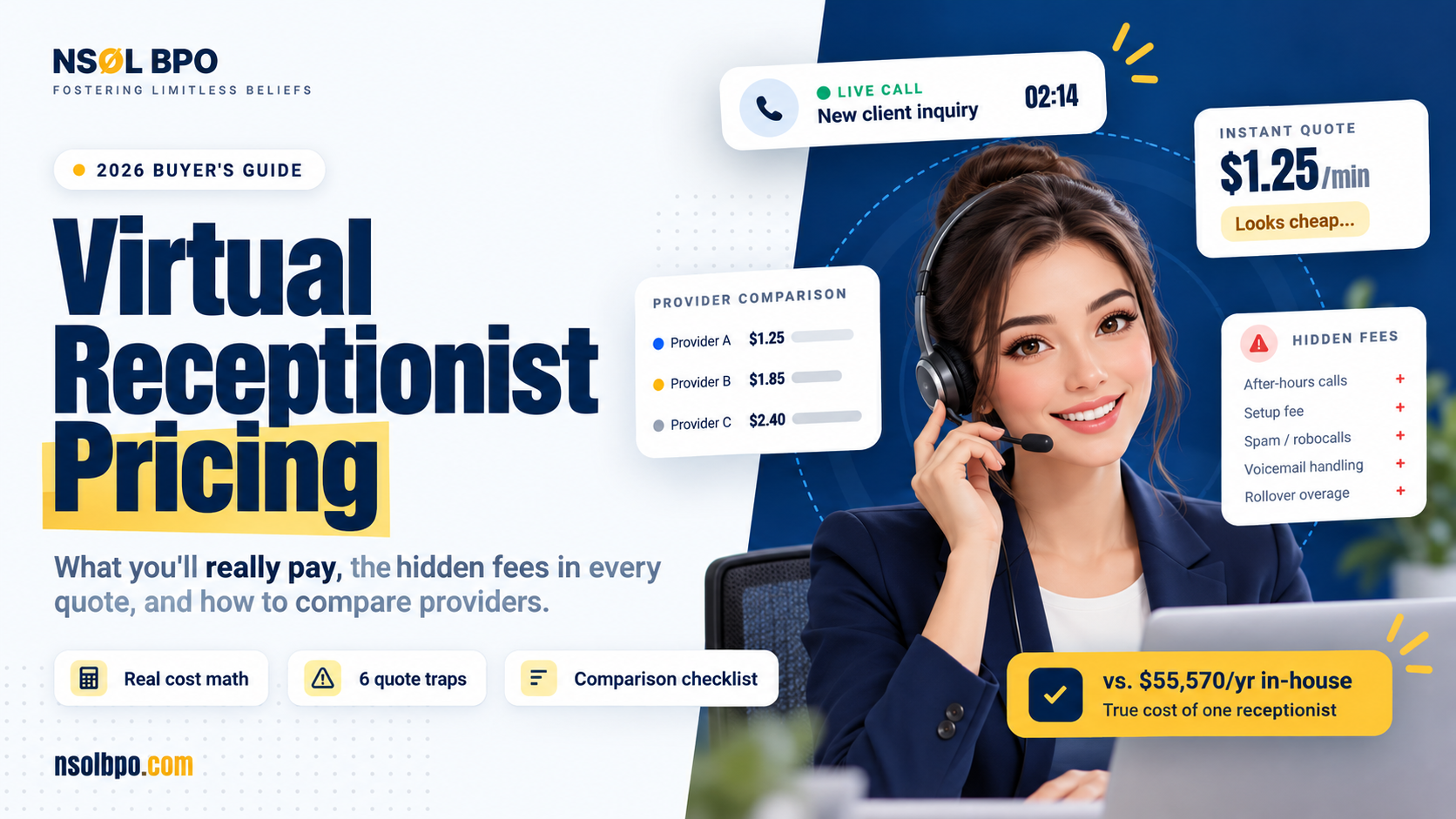
The Bureau of Labor Statistics puts median receptionist pay at $38,010 a year. Then add benefits. As of June 2026, total employer compensation for civilian workers ran $49.46 per hour worked, split $33.85 in wages and $15.61 in benefits. Benefits are roughly 31.6% of the package. Apply that, and an in-house receptionist costs about $55,570 a year, or $26.72 an hour.
Now the part firms forget. That $55,570 buys forty hours. It doesn’t buy evenings, weekends, holidays, sick days, or the two weeks your receptionist is away in August. During all of those, the phone goes back to voicemail, and you’re still paying the salary.
Set it against your own hour at $76.76, and the comparison sharpens again. Every call an attorney fields personally costs nearly three times what trained coverage costs.
And most of those calls aren’t cases. They’re wrong numbers, wrong practice areas, and people after free advice. Sorting them is necessary. It just isn’t attorney work, and paying attorney rates to do it is a choice most firms make without noticing.
Our comparison of a virtual assistant versus a full-time employee runs the same tradeoff across other roles, and the virtual assistant cost guide has the broader hourly ranges.
Law Firm Answering Service or Legal Intake?
These get sold interchangeably, and they aren’t the same purchase. A virtual legal receptionist sits between them.
A law firm answering service takes a message and passes it on. It confirms who called, why, and a callback number. The agent needs your firm name and your hours, and nothing else.
Legal intake qualifies the matter against your criteria, runs a conflict check, books the consult in your calendar, and follows up on no-shows. That takes training on your systems and your screening rules, which is why it costs more and takes longer to set up.
A virtual legal receptionist usually sits in the middle: live answering with legal training and calendar access, without the full intake scoring and follow-up sequence. Which of the three you need depends on whether your problem is coverage, qualification, or both.
Most firms need the second and buy the first, then conclude outsourcing doesn’t work. Our guide to legal intake services covers where the funnel actually leaks, and most of the leaks are not about answering the phone.
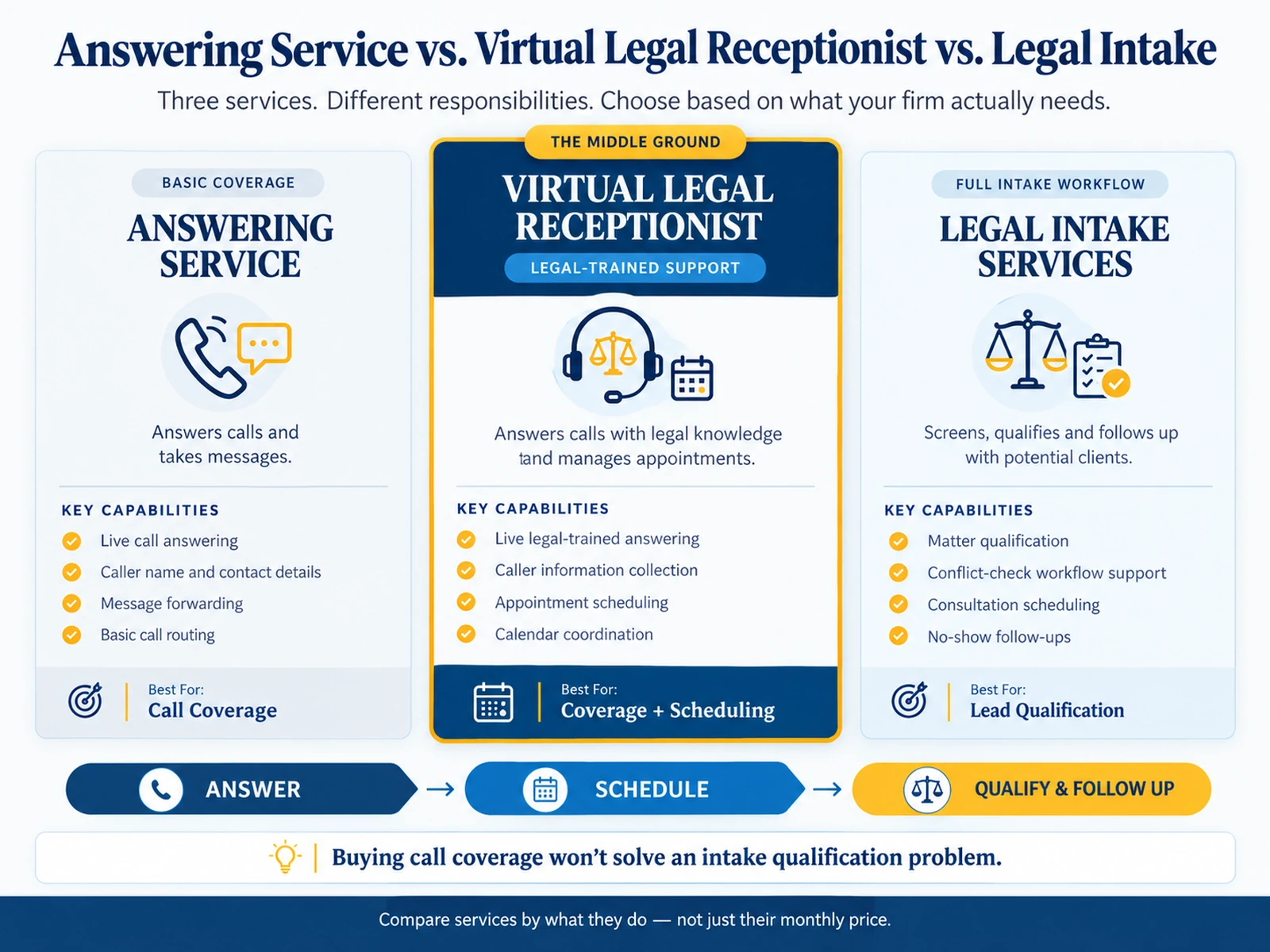
Three purchases that look alike on a sales page.
Price the three against each other on what they actually do, not on the monthly figure. A virtual legal receptionist costs more than a message service and does more than three times as much.
Legal Call Answering and the Confidentiality Line
Legal call answering raises a duty that general reception doesn’t, and it’s worth being precise about it. This is the part firms worry about before they hire a virtual legal receptionist, and the part providers gloss over.
Anyone answering your phone hears privileged-adjacent information from the first sentence. Names, opposing parties, sometimes facts a caller shouldn’t be volunteering at all. Your duty to protect that doesn’t shrink because the call was answered somewhere else.
ABA Model Rule 5.3 on responsibilities regarding nonlawyer assistance requires a lawyer with direct supervisory authority over a nonlawyer to “make reasonable efforts to ensure that the person’s conduct is compatible with the professional obligations of the lawyer.” That applies to whoever picks up your phone.
In practice, four things:
- A signed confidentiality agreement covering every agent who touches your line, not just the provider as an entity.
- A written answer on where call recordings and notes are stored, and what happens to them when the contract ends.
- A script boundary the agents are trained on, so nobody offers an opinion to be helpful.
- Conflict information captured at the first call, before anyone books a consult.
Get all four in the contract before the first call is answered. A provider who has them ready has done this for law firms before. One who needs a week to think about it is learning on your files.
State rules differ on disclosure and supervision. Check your own bar rather than relying on a provider’s assurance. None of this is legal advice.
After Hours Answering Service for Law Firms
An after-hours answering service for law firms is the half most firms buy first, and it’s the right instinct for the wrong reason.
The instinct’s correct because that’s where the volume hides. Of the 128 uncovered hours in a week, evenings and weekends carry the calls that are most urgent and least patient. Someone arrested on Saturday is not waiting until Monday.
The reason is wrong when firms treat after-hours as a separate, lower-grade service. If the overnight agent can’t run a conflict check or book a consult, you’ve delayed the loss rather than prevented it. The caller still has to be chased on Monday, by which point they’ve spoken to two other firms.
Whatever you buy for business hours, buy the same thing for the hours around them. The confidentiality standard, the script and the system access shouldn’t change at 5 pm. A virtual legal receptionist working nights should be doing the same job as the one working mornings.
What to Ask Any Provider
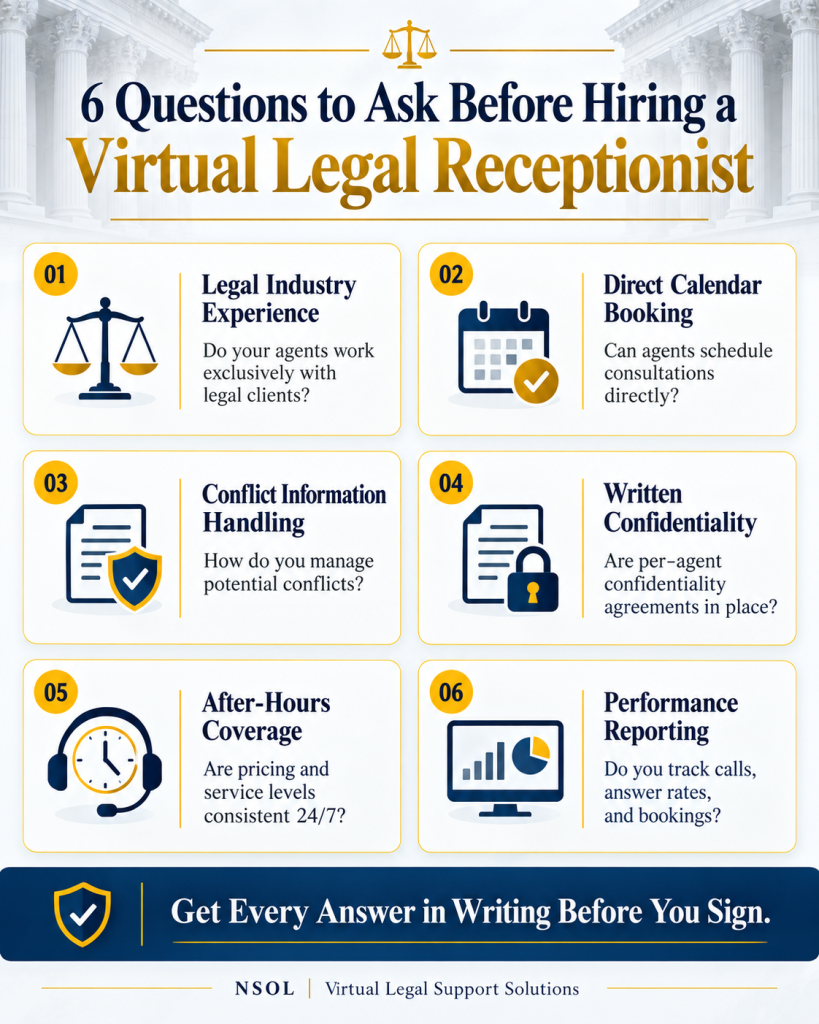
Six questions for anyone selling you a virtual legal receptionist. By email, so the answers are in writing.
Do your agents work only legal accounts? An agent splitting a shift between a law firm and a dental practice will not catch a limitation issue.
Can they book directly into our calendar? If not, every consult needs a second touch from your staff, and you’ve bought a message service.
How do you handle conflict information? They should be asking which system you use, not explaining their own.
What is the confidentiality arrangement, in writing? Per-agent, not just corporate. Plus storage location and end-of-contract handling.
Does after-hours cost the same and do the same? Plenty of providers advertise 24/7 and price nights differently, with a thinner service behind it.
What do you report, and how often? Calls, answer rate, consults booked. If they can’t report it, you can’t manage it.
We cover how NSOL structures legal support on our legal virtual assistant services page, and the wider front-office version in customer experience outsourcing.
The Bottom Line
Forty hours of coverage in a 168-hour week isn’t a staffing choice. It’s a gap with a number on it, and a virtual legal receptionist is the cheapest way to close it.
You’re already paying to generate the calls. The only question is whether what catches them is worth what the calls cost, and in most firms it clearly isn’t.
Start by counting. How many calls came in last month, how many were answered live, how many became consults. Three numbers, one month. Whatever’s wrong, those three will point at it.
Then decide the structure. A virtual legal receptionist suits firms whose calls arrive unevenly or outside office hours, which describes most solo and small practices. A full-time hire suits firms with steady daytime volume and nothing after five. Either way, the script and the screening rules stay yours, because those encode judgment nobody outside the firm can supply.
NSOL BPO builds legal call coverage around your script, your calendar, and your conflict process, with agents who work legal accounts only. If you want someone to look at your coverage gap before you spend another dollar on ads, get in touch, and we’ll walk through it with you. Our full virtual assistant services cover the rest of the firm, and legal process outsourcing covers the back office behind it.
FAQ Block
What is a virtual legal receptionist?
It’s a professional remote receptionist who takes calls for your law firm, collects conflict information, screens the issue based on your criteria, and schedules consultation appointments.
How much does a virtual legal receptionist cost?
Cheaper than its in-house counterpart when you compare apples-to-apples. The average pay of a receptionist according to BLS is $38,010, and with benefits, which constitute 31.6% of salary on average, an in-house hire would cost $55,570. And that gets you full-time only, forty hours a week, not including nights, weekends, or holidays.
Can a legal receptionist provide legal advice?
No. Your receptionist can explain practice areas and process, but cannot evaluate the case, predict its outcome, or advise a client about their chances for success. This is called the unauthorized practice of law, and the supervisory responsibility under ABA Model Rule 5.3 belongs to you.
What is the difference between a law firm’s answering service and legal intake?
A law firm answering service simply takes a message. In contrast, legal intake will qualify the matter, run a conflict check, schedule the consult, and follow up on no-shows. Most law firms require the latter, purchase the former, and find that outsourcing doesn’t work.
Is there a need for after-hours phone coverage?
There are 168 hours in a typical week, and most offices are open for only forty of them. Calls during off-hours are always the most important and least forgiving. Failure to run a conflict check and schedule a consult by after-hours agents has only resulted in delaying the damage.
How will we ensure client confidentiality with an outside receptionist?
Signed confidentiality agreements by all agents and not just the provider, written assurance about where recordings and notes are stored, a boundary line drawn through the script, and collection of conflict information at first call. The laws regarding supervision and disclosure vary from state to state; please check your bar requirements.
Sources & References
This article draws on authoritative legal guidance and U.S. Bureau of Labor Statistics data to support its discussion of legal receptionist services, staffing costs, and employment trends.
- American Bar Association (ABA): Model Rule 5.3 — Responsibilities Regarding Nonlawyer Assistance
- U.S. Bureau of Labor Statistics (BLS): Office and Administrative Support Occupations — Pay and Employment Outlook
- U.S. Bureau of Labor Statistics (BLS): Lawyers — Occupational Outlook and Median Pay
- U.S. Bureau of Labor Statistics (BLS): Employer Costs for Employee Compensation
- U.S. Bureau of Labor Statistics (BLS): Employment Projections by Occupational Group